
Blog Post
Agave Spirits: A Primer on Mexico's Most Misunderstood Drink
Other
May 21, 2026
Carlos Roberts
Introduction
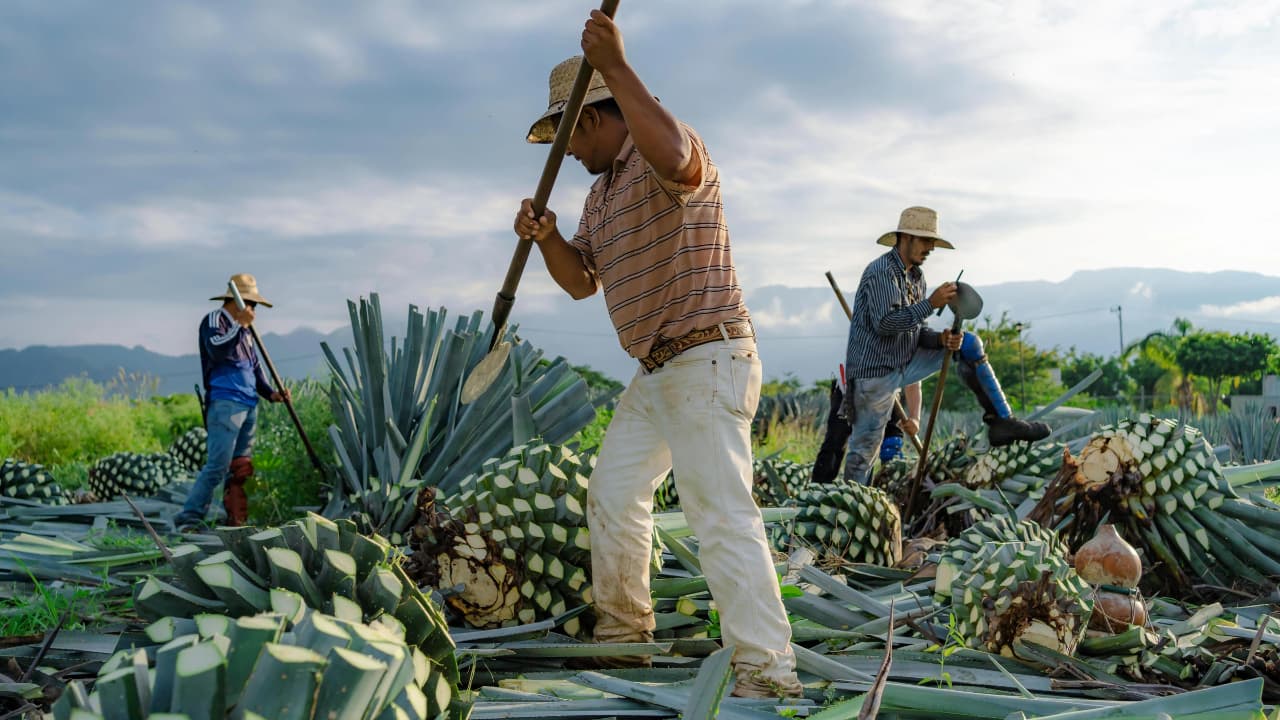
You order a margarita and shoot the lime. That's the reductive version of an agave spirit. The longer version involves a desert plant that takes a decade to mature, a man with a sharpened steel blade called a coa, an earthen pit lined with hot volcanic stones, and a clay pot still that's been in the same family for four generations. It's an intoxicant. It's also a 2,000-year-old ceremonial practice. Here's what the categories mean, what the marketing gets wrong, and how to drink the real thing.
The Categories
Agave spirits come from succulent plants of the genus Agave, native to Mexico. There are over 200 species, about 30 of which are used to make spirits. The legal names are denominations of origin, like Champagne. You can grow blue agave in Texas. You cannot legally call what you make from it tequila.
Spirit | Region | Plant | Production Signature |
|---|---|---|---|
Tequila | Jalisco (+4 states) | Blue agave only | Steel autoclaves, column stills, mostly industrial. |
Mezcal | 9 states; ~70% from Oaxaca | 30+ species; espadín most common | Earthen pit roasting, tahona, wild fermentation. Smoky. |
Bacanora | Sonora | Agave angustifolia | Pit-roasted but lighter and less smoky than mezcal. |
Raicilla | Coastal and mountain Jalisco | Lechuguilla, maximiliana | Sweeter, fruitier. DO granted in 2019. |
Sotol | Chihuahua, Coahuila, Durango | Dasylirion (desert spoon, not agave) | 12 to 15 years to mature. Herbaceous, earthy. |
Pulque | Central Mexico | Maguey sap (aguamiel) | Fermented, not distilled. Sacred to the Aztecs. |
How It's Actually Made
Two bottles can both be labeled "tequila" and represent completely different traditions. The difference is in the process.
Industrial tequila is cooked in pressurized steel autoclaves in under 12 hours, crushed with roller mills, fermented in stainless tanks with cultivated yeast, and distilled in column stills. The result is consistent, smooth, and largely stripped of the plant.
Traditional mezcal is cooked for 3 to 5 days in an earthen pit lined with hot volcanic stones. That's where the signature smoke comes from. The roasted piñas are crushed by a several-ton stone wheel called a tahona, pulled by a horse or mule. Fermentation happens in open wooden vats with wild yeasts over 5 to 15 days. Distillation is done in copper pot stills, or in the most traditional palenques, in small clay pots called ollas de barro. Every step is slower, and produces a spirit that tastes recognizably of the plant.
What the Marketing Gets Wrong
"Smooth" is not a virtue. Smoothness is what additives produce. Mexico's tequila regulator (the CRT) allows up to 1% additives, like glycerin and caramel coloring, without disclosing it on the label. One percent is enough to alter the spirit. In late 2024, the CRT pressured the popular app Tequila Matchmaker into killing its additive-free certification. The fight is about whether drinkers get to know what's in the bottle. In most cases, they don't.
Celebrity bottles are mostly marketing. Most celebrity tequilas come from large industrial distilleries that produce dozens of other brands. The NOM number on the label (a four-digit code) tells you exactly where it was made.
The worm is a 20th-century gimmick. The moth larva that sometimes appears in mezcal bottles is a 1940s marketing invention. Not traditional, not ceremonial, and not present in any high-quality mezcal.
Older is not always better. Reposado, añejo, and extra añejo tequilas pick up vanilla and caramel from oak that overwhelms the agave. Many serious drinkers consider blanco the category where the spirit tastes most like itself.
The Sustainability Problem
The boom has created a quiet crisis. Agave cultivation in Mexico has expanded over 400% in 30 years. In two of Oaxaca's main mezcal regions, more than 34,000 hectares of forest (roughly the size of Detroit) have been cleared for agave in 27 years. The wild agaves are the more urgent concern. Tobalá, tepeztate, and arroqueño take 15 to 25 years to mature and can't be farmed at scale, so demand for "wild mezcal" has driven over-harvesting. On a bottle, look for the species, the producer, the village, and a NOM number. The small, transparent producers are the ones doing this responsibly.
Where to Experience It
Oaxaca is the center. Santiago Matatlán, 45 minutes from Oaxaca City, calls itself the World Capital of Mezcal. Palenque tours run $80 to $150 USD and typically visit three or four producers. Look for Real Minero, Los Danzantes, Casa Cortes, Gracias a Dios, and El Sabino. For pulque, the pulquerías of Mexico City (Las Duelistas, La Risa) are cheap and ancient. Stateside, the bars taking agave spirits seriously include Madre in LA, Mayahuel in New York, and Las Almas Rotas in Dallas.
How to Drink It
Use a copita, not a shot glass. Sip slowly. Good mezcal has a long finish that lasts 30 seconds after you swallow. Skip the salt and lime, both invented in the 1940s to mask cheap tequila. In Oaxaca, the traditional pairing is orange slices with sal de gusano (worm salt). Drink at room temperature. Cold suppresses aroma, ice dilutes, and both reduce the experience to something more comfortable and less interesting.
The plant takes a decade. The pit roast takes a week. The drink takes an evening. The point is paying attention to the difference.