
Blog Post
The 10 Most Sustainable Luxury Wellness Retreats
Places
May 7, 2026
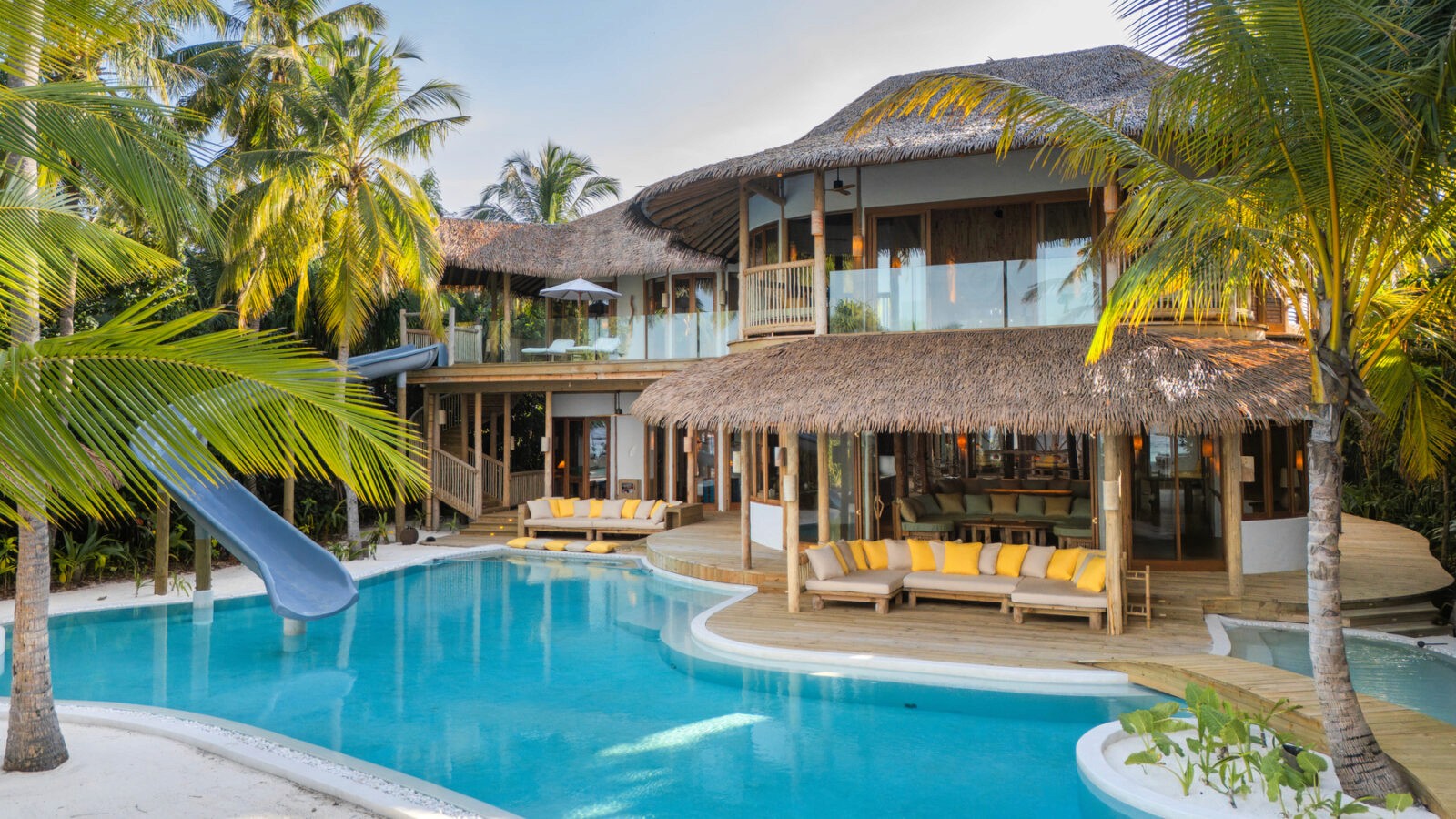
Sustainability in luxury hospitality has gotten increasingly diluted as more properties adopt the language without changing their practices. The properties that take sustainability seriously tend to integrate it at the level of architecture, food sourcing, energy infrastructure, and community engagement rather than treating it as a marketing tier added to existing operations.
These are the 10 most genuinely sustainable luxury wellness retreats in the world, ranked. The criterion: independent sustainability verification or recognition, integrated sustainability practices that affect every part of the operation, and a wellness approach that draws on the local environment rather than imposing a generic spa overlay.
1. Soneva Fushi (Maldives)
The category's earliest committed pioneer and still the benchmark. Soneva Fushi was founded in 1995 with the "Slow Life" philosophy as its operating principle, and the property has spent nearly 3 decades extending sustainability into every operational dimension: a glass studio that recycles bottles into art and tableware, a Soneva Foundation that has planted millions of trees globally to offset guest emissions, a "Eco Centro Waste-to-Wealth" facility that processes the resort's waste into compost and reusable materials, on-site water bottling, and a no-shoes policy that's both aesthetic and ecological. The wellness program draws on Maldivian botanical traditions, marine treatments, and an absence of programmed activity that lets the natural environment do the work.
2. The Brando (Tetiaroa, French Polynesia)
The atoll Marlon Brando bought in 1967 with the explicit goal of preserving its ecosystem, opened to guests in 2014 with a sustainability infrastructure that's still unmatched in luxury hospitality. The property runs on 100% renewable energy (a combination of solar and coconut biofuel), uses Sea Water Air Conditioning to cool the resort using deep-ocean water, and houses the Tetiaroa Society research lab on site (an independent scientific organization studying the atoll's ecosystem and conducting public-benefit research). 35 villas on 12 motu (small islands) within the atoll, with a wellness program (Varua Te Ora Polynesian Spa) that draws on Tahitian healing traditions and uses ingredients from the surrounding ocean and the property's own gardens. LEED Platinum certified.
3. Four Seasons Naviva (Riviera Nayarit, Mexico)
The Americas' most credentialed sustainable wellness retreat. Naviva earned Responsible Hospitality VERIFIED in 2025, becoming the first beachfront glamping property in Mexico or anywhere in the Americas to receive the designation. World Travel Awards 2025 named it Mexico & Central America's Leading Green Hotel. The property's sustainability practices integrate with its wellness model: 15 tented bungalows on 48 forested acres designed with biophilic principles (natural materials, no plastic, minimal infrastructure), full all-inclusive operations that reduce supply chain transactions, a 30-guest maximum that limits environmental load, and a forest preserve that the property actively maintains.
The wellness orientation is built around the same principles. Forest bathing draws on the surrounding jungle. Temazcal ceremonies use traditional Mexican sweat lodge practices. Treatments happen in freestanding forest pods with no formal spa building. The Naviva Unplugged music programming uses acoustic performance to keep electrical consumption low. Few properties at the luxury wellness tier have integrated sustainability and wellness as completely.
4. Six Senses Bhutan
The Six Senses brand has consistently led the major hotel groups on sustainability practice, and the Bhutan property (5 lodges across the country in different valleys) represents the brand's most thoroughly integrated sustainability approach. Each lodge uses local stone, timber, and traditional Bhutanese architectural techniques. The wellness program draws on Bhutanese traditional medicine and Buddhist practices. The country's gross national happiness framework is reflected in the resort's operations, including a commitment to source locally, employ Bhutanese staff, and support cultural preservation.
5. Bawah Reserve (Anambas Islands, Indonesia)
A 6-island archipelago in the Riau Islands of Indonesia, opened with strict sustainability constraints: bamboo, copper, recycled wood, and natural fibers used as primary construction materials, no concrete, no air conditioning in some structures (cross-ventilation and shaded design instead), solar power, on-site water filtration, and a marine reserve that protects the surrounding ocean. The wellness program uses the lagoons and reefs as the primary therapeutic environment. 35 suites and tented villas across the islands.
6. Mashpi Lodge (Pichincha Province, Ecuador)
A 22-room sustainability flagship in Ecuador's cloud forest at 1,000 meters elevation, built with a non-extractive philosophy: the property includes a research station that documents the surrounding ecosystem and contributes to scientific publications. The structure is a glass-enclosed building that draws guests into the forest canopy, with sky cable car access into the upper canopy and naturalist-led programming as the central activity. The wellness orientation is implicit rather than explicit: cloud forest immersion, hot tubs overlooking the trees, and a quiet that few wellness properties can match.
7. Lapa Rios (Osa Peninsula, Costa Rica)
A 17-bungalow property in a 1,000-acre private rainforest reserve on Costa Rica's Osa Peninsula, recognized as Central America's first National Geographic Unique Lodge of the World and a pioneer of conservation-based luxury hospitality. Open since 1993. The property has protected its surrounding forest from deforestation and supported community conservation programs. The wellness orientation uses the rainforest as the primary asset: hiking, birdwatching, immersive nature experiences, and treatments using local botanicals.
8. Bisate Lodge (Volcanoes National Park, Rwanda)
Wilderness Safaris' 6-villa lodge built in a reforested volcanic crater near Volcanoes National Park (home to the mountain gorillas). The lodge has planted over 100,000 trees as part of a reforestation program that's restoring the ecosystem around the property, and the design (woven volcanic-rock structures) draws on Rwandan vernacular architecture. The wellness orientation is naturalist-led: gorilla trekking, forest immersion, and the kind of ecosystem engagement that few wellness retreats provide. Sustainability practices include zero waste-to-landfill, solar power, and partnership with local Rwandan staff and suppliers.
9. Borana Lodge (Laikipia, Kenya)
A 9-cottage lodge on a 32,000-acre wildlife conservancy in the Laikipia region of Kenya. The conservancy houses a critical population of black and white rhinos and supports wildlife corridor preservation across East Africa. The property's sustainability orientation runs through every operation: solar power, on-site water management, Kenyan staff and suppliers, and community partnership programs with local Maasai communities. The wellness experience is built around wildlife immersion and the broader Laikipia setting (open savanna, mountain ranges, wildlife). Cottages have outdoor showers, fireplaces, and views toward Mount Kenya.
10. Lefay Resort & Spa Dolomiti (Italy)
A 78-villa wellness property in the Italian Dolomites, opened in 2019 with a sustainability orientation that addresses Alpine-specific concerns: zero-emission heating using a combination of geothermal and biomass, a wellness program built on the brand's "Italian World Wellness" framework (combining Classical Chinese Medicine principles with Western practices), and a Forbes Five-Star spa with a building integrated into the mountain setting. The food program emphasizes regional Italian sourcing with seasonal menus.
What These Properties Share
Sustainability woven into the architecture, not added to operations. Each of these properties was built with sustainability principles informing the construction phase. Retrofitting sustainability into existing operations is harder and rarely produces results at the level of properties built with sustainability as a founding constraint.
Independent verification rather than self-claimed. Several of the properties on this list hold third-party certifications (LEED, Green Globe, Pure Life Project, Responsible Hospitality VERIFIED). The verification matters because sustainability claims have become increasingly diluted in the broader luxury market.
Wellness drawn from local environment. The wellness orientation at each of these properties is connected to the place: Bhutanese traditional medicine in Bhutan, Polynesian healing at Tetiaroa, Mexican temazcal at Naviva, Maldivian botanicals at Soneva. The wellness offering grows out of where the property sits, with no imported aesthetic layered on top.