
Blog Post
Forest Bathing: The Science Behind Shinrin-Yoku
Rituals
April 10, 2026
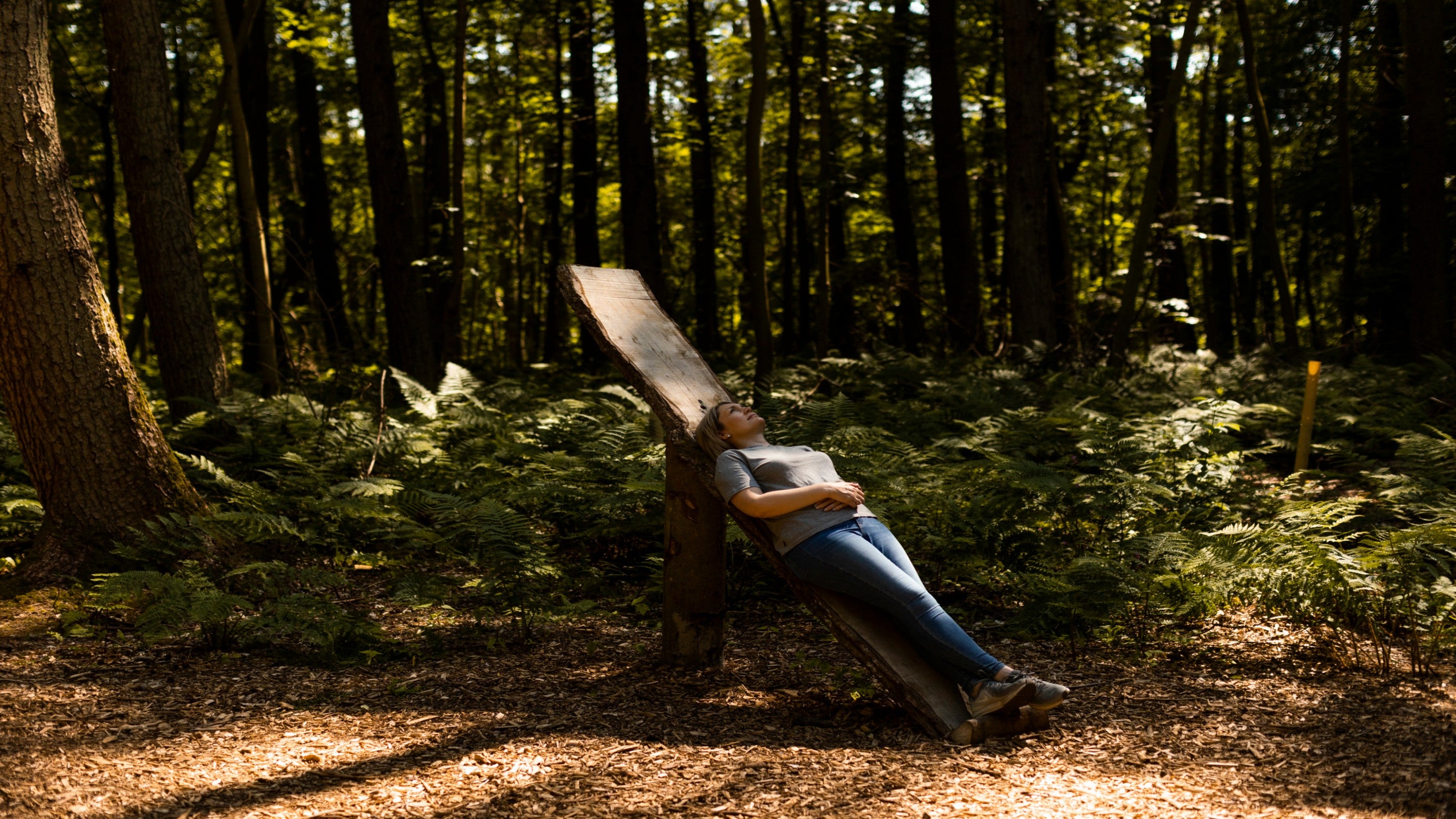
In 1982, the Japanese Ministry of Agriculture, Forestry, and Fisheries introduced the term "shinrin-yoku" (forest bathing) as a public health initiative. The concept was simple: spending time in forests is good for you. Go walk among trees. Not for exercise, not for a destination, not to reach a summit. Just to be in the forest and absorb it through your senses.
40 years later, the research backing that recommendation is substantial enough that forest bathing is prescribed by physicians in Japan, integrated into public health programs in South Korea, and the subject of a growing body of peer-reviewed studies in Europe and North America. It also became a wellness trend, which means it now comes with certified guides, $200 group sessions, and Instagram accounts. The trend is harmless. The science is what matters.
What Forest Bathing Is (and Isn't)
Forest bathing is not hiking. The pace is slow (think ambling, not walking). The distance is short (1-2 kilometers over 2-3 hours). The goal is sensory immersion, not physical exertion. You walk, you stop, you listen, you smell, you look at things closely, and you allow the forest environment to engage your senses without filtering the experience through conversation, music, or a phone screen.
A guided session typically includes invitations (not instructions) to engage with the forest in specific ways: touch the bark of a tree and notice the texture, sit by a stream and listen to the water, lie on the ground and look up through the canopy, smell the air after rain. These sound trivial when described in text. They feel different when you're actually doing them in a forest, with 2 hours and no agenda.
Forest bathing is also not nature therapy, wilderness therapy, or ecotherapy, though it shares elements with all of them. The distinction is that forest bathing doesn't require a therapeutic framework, a diagnosis, or a guide. You can do it alone, anytime you have access to trees.
What the Research Shows
The evidence for forest bathing's health effects has been building since the late 1990s, primarily from Japanese and South Korean research institutions. Here are the key findings:
Cortisol reduction. Multiple studies have measured salivary cortisol levels before and after forest walks versus urban walks of the same duration and intensity. Forest walks consistently produce greater cortisol reductions. A 2010 study by Bum Jin Park et al. (published in Environmental Health and Preventive Medicine) found that forest environments lowered cortisol by 12.4% compared to urban environments, with corresponding reductions in heart rate, blood pressure, and sympathetic nervous system activity.
Immune function. This is the most surprising and most cited finding. Dr. Qing Li, an immunologist at Nippon Medical School in Tokyo, conducted a series of studies showing that 2-3 days of forest walking increased human natural killer (NK) cell activity by up to 50%, and that the increase persisted for up to 30 days after the forest exposure. NK cells are a type of white blood cell that plays a role in fighting infections and tumors. Li attributed the effect partly to phytoncides, volatile organic compounds emitted by trees (primarily conifers) as part of their defense systems. When inhaled, phytoncides appear to stimulate NK cell production and activity.
Blood pressure. A 2017 meta-analysis in the International Journal of Biometeorology reviewed 20 studies and found that forest environments consistently reduced both systolic and diastolic blood pressure compared to urban control conditions.
Mood and mental health. Forest exposure reduces measures of anxiety, depression, anger, fatigue, and confusion across multiple validated psychological assessment tools. A 2019 study in Frontiers in Psychology found that as little as 20 minutes in a natural setting (sitting or walking) was sufficient to significantly reduce cortisol levels.
Attention restoration. Exposure to natural environments improves directed attention (the ability to focus on a task while filtering distractions). This effect, first described by Rachel and Stephen Kaplan in their Attention Restoration Theory, has been replicated in multiple studies. The forest doesn't demand directed attention the way an urban environment does. It allows the attention system to rest and recover, which improves focus and cognitive performance after the exposure.
The Phytoncide Effect
Phytoncides deserve a closer look because they're the mechanism most specific to forests (as opposed to general outdoor exposure).
Trees release volatile organic compounds into the air as a defense against insects, bacteria, and fungi. Conifers (pine, cedar, cypress, spruce) produce the highest concentrations, but deciduous trees also emit them. When you walk through a forest, you inhale these compounds. The research (primarily Li's studies) suggests that inhaled phytoncides increase NK cell count and activity, decrease adrenaline and noradrenaline concentrations in urine (indicating reduced stress hormone production), and increase anti-cancer proteins within NK cells.
The concentrations are highest in dense forests, at higher humidity levels, and during the growing season (spring and summer). Morning is generally when phytoncide concentration peaks. Rain and warm temperatures increase emission rates.
This means that a slow walk through a coniferous forest on a humid morning after rain is, from a phytoncide exposure perspective, the optimal forest bathing condition.
How to Do It
You don't need a guide, a program, or a certification. You need a forest and 2 hours.
Choose the right forest. Dense, mature forest is ideal. Conifers (pine, cedar, fir) produce the highest phytoncide concentrations, but any forest works. Urban parks with substantial tree cover produce some effects but at lower intensity than deep forest.
Leave the phone. Or at least put it in airplane mode. The point is sensory immersion, and a phone (with its notifications, camera, and reflexive checking) fractures that immersion. If you're using a phone to navigate, learn the trail before you go or carry a physical map.
Go slow. Walk at a pace that feels almost frustratingly slow. Stop frequently. The goal is not to cover distance. The goal is to saturate your senses with the forest environment.
Engage your senses deliberately. What do you hear? (The answer is more complex than you initially think: wind in different tree species sounds different, water has texture, birds occupy specific frequencies.) What do you smell? (Soil, bark, resin, decomposing leaves, moisture.) What do you see when you look closely? (The texture of moss, the pattern of lichen, the movement of light through leaves.) What does the air feel like on your skin?
Sit down. Find a spot and stay there for 15-20 minutes without moving. The forest changes when you're still. Animals reappear. Sounds you didn't notice while walking become audible. The stillness is where the restorative effect concentrates.
2 hours minimum. Most of the research on forest bathing benefits uses exposure periods of 2-4 hours. Shorter exposures (20-30 minutes) produce measurable cortisol reduction, but the deeper immune and mood effects appear to require longer immersion.
Where to Go
Japan codified forest bathing, and the country designates 62 official "Forest Therapy" bases: certified forests with trails designed for therapeutic walking, often with monitoring stations where you can check your blood pressure before and after. The forests around Yakushima (an island off Kyushu with 1,000-year-old cedar trees), the Kiso Valley in the Japanese Alps, and the forests of Nagano Prefecture are among the most popular.
South Korea has integrated forest bathing into its national healthcare infrastructure. The Korea Forest Service operates "healing forests" across the country, and several hospitals prescribe forest programs for patients with stress-related conditions.
British Columbia, Canada has some of the most accessible old-growth forest in North America. Cathedral Grove on Vancouver Island (800-year-old Douglas firs), Pacific Spirit Regional Park in Vancouver, and the Hoh Rain Forest-adjacent temperate rainforest trails in the Pacific Northwest offer the density and age of forest that maximizes the experience.
The Black Forest (Schwarzwald), Germany is dense, well-maintained, and threaded with hiking paths that are perfect for slow forest walking. The combination of thermal spas (Baden-Baden) and deep forest makes southwest Germany a natural pairing of wellness modalities.
Redwood forests in Northern California provide the most dramatic forest bathing setting in the United States. Walking among trees that are 1,500+ years old and 100+ meters tall recalibrates your sense of scale in a way that younger forests can't match.
The Japanese understood something in 1982 that the rest of the world is catching up to: forests aren't just scenery. They're a physiological intervention delivered through the senses, requiring no equipment, no training, and no belief system. You just have to show up, slow down, and breathe.