
Blog Post
The Best Spa Towns in Europe
Places
April 10, 2026
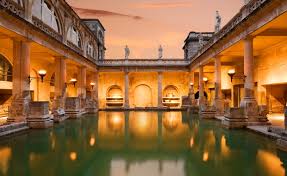
The concept of "going to the waters" predates modern wellness by about 2,000 years. The Romans built elaborate bath complexes at natural thermal springs across Europe, and the towns that grew around those springs have been attracting people seeking cures, relaxation, and a credible excuse to sit in hot water for extended periods ever since. In 2021, UNESCO recognized 11 European spa towns as World Heritage Sites under the heading "Great Spa Towns of Europe," which gave official cultural status to something Europeans have known for centuries: these towns are worth visiting.
Here are the ones that still deliver.
Baden-Baden, Germany
Baden-Baden is the spa town against which all others are measured. Nestled in the Black Forest in southwestern Germany, it's been a destination for thermal bathing since Roman times (the Roman bath ruins beneath the modern Friedrichsbad are still visible). In the 19th century, it became the summer capital of European aristocracy: Dostoyevsky gambled here, Brahms composed here, and Queen Victoria vacationed here.
The town has 2 major thermal baths. Friedrichsbad is the grand one: a Renaissance-style bathhouse opened in 1877 that runs visitors through a 17-step ritual involving hot rooms, cold plunge pools, steam rooms, and thermal pools over approximately 3 hours. It's clothing-free (mixed-gender on some days, separated on others), which aligns with German bathing norms and catches some visitors off guard. The architecture (vaulted ceilings, Roman-style columns, mosaic floors) makes the nudity feel less exposed than it sounds.
Caracalla Spa is the modern option: a glass-and-steel complex with indoor and outdoor thermal pools, grottos, whirlpools, and a sauna landscape. You wear a swimsuit in the pool areas (saunas are nude, per German custom). It's less ceremonial than Friedrichsbad and more suited to families or anyone who prefers a contemporary spa environment.
Beyond the baths, Baden-Baden has a Michelin-starred restaurant scene, the Festspielhaus (one of Europe's largest opera and concert halls), and hiking trails into the Black Forest that start from the town center.
Budapest, Hungary
Budapest calls itself the "City of Baths," and the claim holds up. The city sits on a geological fault line that produces over 120 natural thermal springs, and the Hungarian bathing tradition is among the oldest and most integrated into daily life in Europe. Locals use the thermal baths the way other cities use coffee shops: regularly, socially, and without thinking of it as a "wellness" activity.
Szechenyi Baths is the largest medicinal bath complex in Europe: a neo-Baroque palace built in 1913 in City Park, with 18 pools (3 outdoor, 15 indoor) ranging from 20°C to 40°C. The outdoor pools stay open in winter, and the image of steam rising off the yellow building while bathers play chess on floating boards in 38°C water is one of the most iconic visuals in European travel. It's also crowded, especially on weekends and during the "sparty" (spa party) events. Go on a weekday morning for the authentic experience.
Gellert Baths sit at the base of Gellert Hill on the Buda side of the Danube. The Art Nouveau interior (1918) is the most beautiful of any bath in Budapest: mosaic-tiled pools, carved stone columns, and a wave pool that's been operating since the original opening. The thermal pools and steam rooms are smaller and less social than Szechenyi's, which makes for a quieter experience.
Rudas Baths date to the Ottoman occupation (built in the 1550s) and the original octagonal Turkish pool beneath a domed ceiling is still in operation. The contrast between the 500-year-old Turkish bath and the modern rooftop pool (added in 2014, with panoramic views of the Danube and the city) is the most compelling architectural experience in Budapest's bathing scene.
Kiraly Baths is another Ottoman-era bath (1565) that's been restored with a contemporary eye. Smaller and less touristy than Szechenyi or Gellert, with a genuine local feel.
Bath, England
The only hot springs in the United Kingdom, and the town built its entire identity around them. The Romans established Aquae Sulis here in the 1st century AD, and the remarkably preserved Roman Baths (temple, bathing complex, heated rooms) are one of the best Roman-era sites in northern Europe. You can tour the Roman Baths but can't swim in them (the water isn't treated for modern bathing standards).
Thermae Bath Spa is the modern facility, opened in 2006, that channels the same natural thermal water into contemporary pools. The rooftop pool, with views over Bath's Georgian architecture and the Abbey, is the highlight. The building itself (designed by Nicholas Grimshaw) is a glass-and-stone cube that fits surprisingly well into the historic streetscape. The water is naturally warm (33-35°C) and mineral-rich (calcium, sulfate, chloride).
Bath is also a UNESCO World Heritage Site for its Georgian architecture (the Royal Crescent, the Circus, Pulteney Bridge), which makes the town itself a destination beyond the spa.
Karlovy Vary, Czech Republic
Karlovy Vary (Carlsbad in German) is a spa town in western Bohemia built along a river gorge, with ornate colonnades covering public drinking fountains that dispense naturally heated mineral water. The tradition here is "drinking cures": you walk between the colonnades with a special ceramic cup (a lazensky poharek, with a spout that doubles as a straw) and sip the mineral water from different springs, each with a different temperature and mineral composition.
The taste ranges from mildly metallic to aggressively sulfuric. The therapeutic claims (digestive disorders, metabolic conditions) have a long history but limited modern clinical support. The experience itself, walking through a 19th-century spa town sipping from ornamental fountains, is pleasant regardless of whether it's curing anything.
Hotel Thermal and Spa Hotel Pupp (a Baroque palace that hosts the Karlovy Vary International Film Festival) are the anchor properties. The town's bathing facilities use the thermal water for soaking, and the treatments draw on a Czech-German spa tradition that emphasizes hydrotherapy, mineral baths, and peat wraps.
Evian-les-Bains, France
The town that gave its name to the bottled water sits on the southern shore of Lake Geneva, facing the Swiss Alps. The Evian spring water emerges at 11.6°C after filtering through glacial sand for 15 years, and the town has been a spa destination since the late 18th century.
Evian Resort operates the Spa des Thermes, which uses the mineral water in hydrotherapy treatments, facial mists, and soaking pools. The setting (lake, mountains, French gardens) is postcard-grade. The town itself is small and quiet, which is either a selling point or a limitation depending on your tolerance for Alpine tranquility.
Montecatini Terme, Italy
Montecatini sits in the hills of Tuscany, about 45 minutes from Florence, and has been a thermal spa destination since the 1300s. The town has 9 thermal establishments, each feeding from different springs with different mineral compositions.
Terme Tettuccio is the most ornate: a neoclassical complex with marble columns, frescoed ceilings, and a landscaped park that looks like it was designed for a Visconti film. The drinking cure tradition here is similar to Karlovy Vary's: you sip mineral water from the springs in a ceremonial setting. The bathing facilities offer mud treatments, inhalation therapy, and thermal pools.
The Tuscan location means you can combine a spa visit with the Italian food, wine, and cultural circuit. Florence, Lucca, and Pisa are all within an hour.
Leukerbad, Switzerland
Leukerbad sits at 1,411 meters in the Valais Alps and produces the largest volume of thermal water in the Alps. The setting, a narrow mountain valley with peaks rising on all sides and thermal steam drifting through the village, is the most dramatic on this list.
Leukerbad Therme is the public complex: indoor and outdoor thermal pools at the base of a cliff face, with views up to the Gemmi Pass (2,300 meters). Soaking in 38°C water while looking at snow-covered Alps is the core product, and it delivers every time.
Walliser Alpentherme & Spa is the more contemporary option with a quieter atmosphere and a rooftop terrace pool.
The town is also a gateway to hiking (summer) and skiing (winter), which means you can combine physical activity with thermal recovery in a single day.
What the Water Actually Does
The therapeutic claims of thermal bathing have been studied for decades, and the evidence supports several effects:
Heat. Immersion in water above 36°C increases core body temperature, which dilates blood vessels, increases blood flow, reduces muscle tension, and lowers blood pressure. These effects are temporary (lasting a few hours after bathing) but consistent.
Buoyancy. Water supports body weight, reducing pressure on joints and allowing relaxation of muscles that are constantly working against gravity. This is why thermal bathing feels so immediately relieving for people with joint pain or chronic tension.
Minerals. The evidence for mineral-specific benefits is mixed. Sulfur has the strongest support (for skin conditions like psoriasis and eczema). Magnesium absorption through the skin is debated. The mineral composition of different springs varies significantly, and the European spa tradition of prescribing specific springs for specific conditions has a longer history than it has clinical evidence.
Ritual. This is the one the science papers don't measure but the bathers know. The act of going to a bath, undressing, immersing, soaking for an hour, and emerging is a ritual of transition: from the demands of the day to the absence of demands. The water helps. The ritual does the rest.
Europeans figured this out 2,000 years ago. The buildings got fancier. The water stayed the same.