
Blog Post
Night Walks in Mexico: Fireflies, Glowing Lagoons, Sea Turtles and Bats
Places
October 4, 2026
Bridget Walker
Key takeaways
Most night nature experiences in Mexico run on a fixed season, and nearly all of them look best in the days around a new moon.
The firefly forests of Nanacamilpa and Calpulalpan in Tlaxcala light up from about the second week of June to early August.
Laguna de Manialtepec near Puerto Escondido glows brightest in the rainy season, from about July to September.
Sea turtle hatchlings are released at dusk, and Mexico's nesting-beach standard bars visitors from handling them.
A red light protects night vision, which takes 20 to 40 minutes to adjust fully to the dark.
Why Mexico's nature is worth seeing after dark
Most visitors see Mexico's forests, lagoons and beaches in daylight, but some of its natural events only happen at night. Fireflies gathering by the thousands, plankton that glows when the water moves, turtle hatchlings crossing the sand and millions of bats leaving a cave at dusk all depend on darkness.
Each one runs on its own calendar, and most depend on the moon as well, so planning a night trip is mainly about picking the right weeks. Night forest walks also use the same slow, senses-first approach as forest bathing, just in the hours after sunset.
Guided night walks in the forest and jungle
A night walk covers the same trail as a day hike but shows you different animals. Many of the mammals in Mexico's tropical forests are nocturnal or live in the canopy. A camera-trap study in the treetops at UNAM's Los Tuxtlas research station in Veracruz recorded 14 tree-dwelling mammal species, and the kinkajou, a fruit- and nectar-eating relative of the raccoon, was the most common. In the lagoons of Sian Ka'an in Quintana Roo, crocodiles are spotted at night by the reflection of a flashlight in their eyes.
Walks are slow and quiet, with long pauses to listen. At least one wellness resort on the Pacific coast now runs guided nocturnal forest bathing sessions. They borrow from the daytime practice, though there's been little research on night sessions in particular. At Calakmul, the archaeological zone closes at 5 p.m., so night activities there take place outside the ruins, with local guides.
Firefly forests in Tlaxcala and the State of Mexico
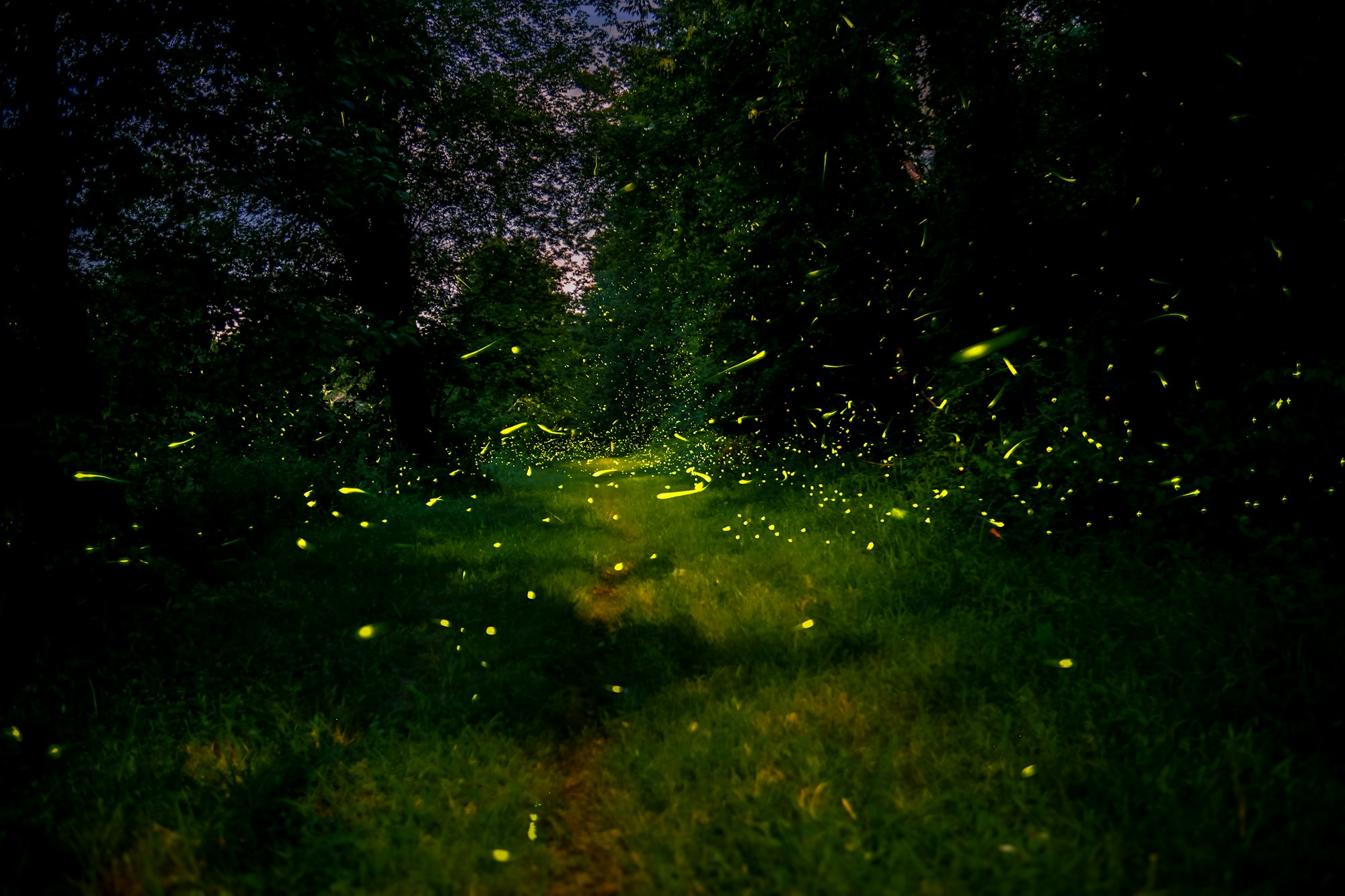
In the pine and oak forests around Nanacamilpa and Calpulalpan in Tlaxcala, Photinus palaciosi, a firefly found only in the highlands of central Mexico, gathers in huge numbers each summer, and the males flash to attract mates. The season runs from about the second week of June to early August. Viewing happens through 23 ecotourism centers certified by the state, and they're strict: lights, phone screens, camera flashes, insect repellent and noise are all banned, and visitors stay on the trails and leave the insects alone. Smaller firefly ecoparks near the Iztaccíhuatl and Popocatépetl volcanoes in the State of Mexico have a similar season, with tours starting around 6:30 p.m.
Bioluminescent lagoons in Oaxaca and Holbox
Bioluminescence comes from dinoflagellates, a kind of plankton that flashes blue when the water around it is stirred. Laguna de Manialtepec, a mangrove lagoon 15 to 20 minutes from Puerto Escondido, is a common place to see it. Local boat guides take visitors out on dark nights, and the glow is strongest in the rainy season, around July to September. Lagunas de Chacahua National Park, also on the Oaxaca coast, has glowing water for much of the year. On Holbox, off the Yucatán Peninsula, the glow shows up in the shallows in summer. A full moon washes the glow out at all of them, so it's worth timing a visit for the new moon.
Sea turtle nesting and hatchling releases
Mexico banned the killing of sea turtles and the harvesting of their eggs in 1990, and beach conservation camps now run along both coasts. On the Pacific side, olive ridley turtles nest mainly from July to January, with the biggest mass nestings, called arribadas, usually between August and November. In Riviera Nayarit, community and volunteer turtle camps release hatchlings at sunset. At Escobilla in Oaxaca, which Mexico's protected-areas agency calls the world's top olive ridley nesting beach, tens of thousands of females can come ashore at once in a single arribada. The beach is a protected sanctuary, and visitors can't just walk onto it.
Releases vary a lot in how they're run. Hatchlings naturally emerge at night, when birds and fish are less likely to catch them, and conservationists have criticized daytime releases put on for tourists. Bright lights draw hatchlings inland, away from the water, so ethical camps keep beaches dark and ask visitors not to use flash. Mexico's federal standard for nesting beaches, NOM-162-SEMARNAT-2012, states that visitors may not handle hatchlings during a release. A camp that hands visitors a hatchling to hold is a reason to leave.
The bat flight near Calakmul
In the Balam-Kú reserve near Conhuás, Campeche, a deep sinkhole known locally as the Volcán de los Murciélagos (the bat volcano) is home to millions of bats. PBS's Nature put the number living in the caves of the Calakmul region at more than three million. At dusk they leave the cave in a rising spiral, which makes it harder for predators to pick off a single bat. Visitors watch from the rim with authorized local guides, and flash and drones aren't allowed. Going into the cave isn't allowed, because bat droppings can carry the fungus that causes histoplasmosis, a lung infection.
Dark skies and stargazing
Light pollution hides the Milky Way from nearly 80% of North Americans, according to a 2016 global atlas published in Science Advances. In Mexico, Parque Ecológico Joya-La Barreta in Querétaro became the country's first DarkSky-certified Urban Night Sky Place, and protected lands in Coahuila and Chihuahua are part of the cross-border Greater Big Bend International Dark Sky Reserve. The Sierra de San Pedro Mártir in Baja California is home to Mexico's National Astronomical Observatory, a site UNAM ranks with Hawaii, the Chilean Andes and the Canary Islands for observing conditions. The Milky Way's bright core is visible from about March to October, and it's easiest to see in the few days around a new moon.
How to plan a night outing in Mexico
Go with local guides. You'll need authorized guides or arranged access for the firefly forests, the bat cave and the turtle sanctuaries.
Bring a red light. The U.S. National Park Service notes that full dark adaptation takes 20 to 40 minutes and that dim red light preserves it.
Wear closed shoes. Scorpion stings peak from March to September in much of Mexico, so it's worth sticking to trails and shaking out your shoes before putting them on.
Check the moon. Fireflies, plankton and stars are all easier to see in the days around the new moon, and a full moon can wash them out.
Go light on chemicals. The firefly centers ban insect repellent, and if you plan to swim in a bioluminescent lagoon, consider skipping sunscreen and chemical repellent that evening.
Frequently asked questions
When is firefly season in Tlaxcala?
The season usually runs from about the second week of June to early August, during the rainy season, and the flashing peaks in the hour or so after dusk.
Can you swim in the bioluminescent lagoon in Puerto Escondido?
Yes. Guided boat tours at Laguna de Manialtepec let visitors swim, often with life jackets, and the glow's easiest to see on a dark night near the new moon.
Are sea turtle releases in Mexico ethical?
They can be. A well-run release happens at dusk or after dark, keeps lights off, and doesn't let visitors handle the hatchlings.
Is a night jungle walk safe?
It's low-risk with a licensed local guide, closed shoes and a headlamp. The bigger risks come from walking off-trail or going alone.