
Blog Post
The Best Hot Springs in the World
Places
April 10, 2026
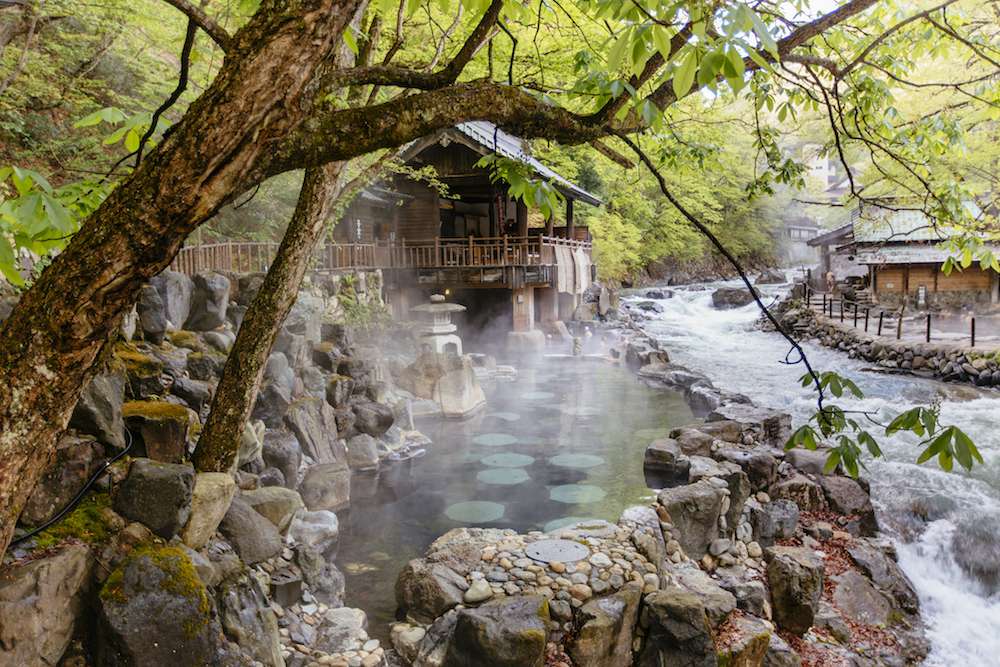
Humans have been sitting in hot water for as long as there's been hot water to sit in. The Romans built entire social infrastructures around thermal baths. The Japanese codified bathing into an art form. Icelanders heat their homes with it. The appeal is elemental: hot water relaxes muscles, dilates blood vessels, reduces cortisol, and produces a state of calm that's hard to replicate with anything else.
The best hot springs are the ones where the setting matches the sensation. Here are the ones worth traveling for.
Iceland
Iceland has more geothermal activity per square kilometer than almost anywhere on earth, and the bathing culture here is central to daily life. Every town has a public pool fed by geothermal water. The fancier ones get international attention, but the best experiences are often the simplest.
The Blue Lagoon is the famous one: a milky-blue geothermal pool in a lava field on the Reykjanes Peninsula, 20 minutes from the airport. It's beautiful. It's also a managed resort experience (swim-up bar, silica mud masks, background music, 400 people in the water). If you've seen photos of Iceland, you've seen the Blue Lagoon. Whether it's worth the €80-120 admission depends on your tolerance for crowds and curation. The Retreat Hotel attached to it is excellent and gets you private lagoon access.
Myvatn Nature Baths in northeast Iceland are the quieter alternative. Same milky-blue geothermal water, similar lava field setting, a fraction of the visitors. The baths overlook Lake Myvatn with volcanic craters visible in the distance. Getting there requires driving the Ring Road (it's about 5 hours from Reykjavik), which keeps the day-trip crowds away.
The Westfjords hot pots are the wild option. Scattered along the most remote coastline in Iceland, these are natural hot springs (not built pools) where geothermal water collects in rock formations along the shore. Drangsnes, Krossneslaug, and Hellulaug are the most accessible. You change in the open, share the pot with whoever else happened to find it, and soak while looking at the North Atlantic. No entrance fee. No infrastructure. No other people, sometimes.
Reykjadalur ("Steam Valley") near Hveragerdi, about 45 minutes from Reykjavik, requires a 3-kilometer hike up a geothermal valley to reach a hot river. The water flows along the valley floor, and you wade in wherever the temperature feels right. Steam rises from the hillsides. The hike is easy to moderate. The experience of sitting in a naturally heated river surrounded by volcanic landscape is worth every step.
Japan
Japanese onsen (hot spring) culture is the most refined bathing tradition in the world. The etiquette is specific, the presentation is meticulous, and the variety (mineral composition, setting, indoor vs outdoor) is enormous. There are over 27,000 hot spring sources across the country.
Kinosaki Onsen in Hyogo Prefecture is a small town on the Sea of Japan coast that's organized entirely around its 7 public bathhouses. You stay at a ryokan (traditional inn), put on a yukata (cotton robe) and geta (wooden sandals), and walk between the bathhouses, soaking in each one. The ritual of moving between baths in your robe through the town's willow-lined streets is as much a part of the experience as the water itself. Each bathhouse has a different character: some have outdoor rock pools, others have cave baths, one has a rooftop terrace overlooking the town.
Beppu on the island of Kyushu produces more hot spring water than any other city in Japan (and the second most in the world, after Yellowstone). The "Hells of Beppu" are 7 geothermal features that are too hot for bathing (one is 98°C) but spectacular to look at: cobalt blue pools, blood-red iron-rich water, steaming mud. The public baths nearby range from municipal (cheap, no-frills, very hot) to ryokan-attached (refined, seasonal food, private outdoor tubs).
Kurokawa Onsen in Kumamoto Prefecture is a small mountain village with over 20 ryokans, each offering outdoor baths (rotenburo) in forested settings along a river gorge. You can buy a pass (nyuto tegata) that lets you visit 3 different ryokan baths, which is the best way to experience the variety. The outdoor baths here, surrounded by forest with steam rising through the trees, are the image most people have of Japanese onsen culture.
Noboribetsu in Hokkaido is the premier hot spring town on Japan's northern island. The source is Jigokudani ("Hell Valley"), a volcanic crater that produces 10,000 tons of hot water per day in multiple mineral compositions. The hotels and ryokans here are larger and more resort-oriented than the small-town onsen villages in Kyushu, but the variety of water (sulfur, iron, salt, alkaline) in a single town is unmatched.
New Zealand
Hot Water Beach on the Coromandel Peninsula is one of the most unusual hot spring experiences in the world. Geothermal water seeps through the sand at low tide, and you dig your own hot pool on the beach with a shovel. The pools last 2-3 hours before the tide comes back in and erases them. The temperature varies depending on where you dig and how deep you go. On a cool morning, sitting in a hand-dug hot pool on a New Zealand beach while waves break 20 meters away is unreasonably pleasant.
Polynesian Spa in Rotorua overlooks Lake Rotorua and offers 28 hot pools in different configurations: acidic (for therapeutic soaking), alkaline (for skin care), private, family, and adults-only. Rotorua is New Zealand's geothermal hub, and the whole town smells faintly of sulfur (you stop noticing after an hour). The spa pools vary in temperature from 36°C to 42°C, and the lakeside setting adds visual calm.
Wai-O-Tapu near Rotorua isn't a bathing destination (the water is too acidic and too hot), but it's worth a mention as the most visually dramatic geothermal site in New Zealand. The Champagne Pool (a 65-meter-wide crater of vivid orange and green water) and the Artist's Palette (a landscape of colored thermal pools) are extraordinary. Combine it with a bathing stop at Polynesian Spa.
Turkey
Pamukkale is a series of white travertine terraces cascading down a hillside in western Turkey, formed by calcium-rich thermal water that deposits minerals as it flows and cools. The terraces look like frozen waterfalls, and the shallow pools at each level hold warm (not hot, roughly 35°C) mineral water. You wade barefoot through the terraces (shoes are prohibited to protect the formations). The ruins of the ancient city of Hierapolis sit at the top of the terraces, and you can swim in the "Cleopatra Pool" (an ancient Roman bath with submerged marble columns) for an additional fee. Pamukkale is a UNESCO World Heritage Site and gets crowded during the day. Early morning is the best time.
United States
Dunton Hot Springs (Colorado) is a restored ghost town in the San Juan Mountains that's been converted into an all-inclusive luxury resort. The hot springs are piped into a hand-hewn log bathhouse, an outdoor riverside pool, and a tepee with a spring-fed tub. The setting (a box canyon at 9,000 feet, surrounded by peaks) is among the most dramatic in the American West. The resort is expensive ($1,000+ per night), intimate (12 cabins), and remote (30 miles of dirt road from the nearest highway).
Ojo Caliente (New Mexico) is one of the oldest health resorts in North America. The springs have been used for thousands of years, and the modern facility channels water from multiple sources (lithia, iron, soda, arsenic, and mud) into separate soaking pools. The arsenic pool sounds alarming until you learn that arsenic in trace amounts has been used therapeutically for centuries (and the concentration is well below anything harmful). The setting is high desert New Mexico: red rock, juniper, big sky. Rooms and tent cabins are available on site.
Strawberry Park Hot Springs (Colorado) near Steamboat Springs is a natural hot spring pool in a mountain forest. The pools are rock-lined and fed by water at 40°C, surrounded by snow in winter (the contrast of hot water and cold air with snow falling on your head is one of the great sensory experiences in American travel). After dark, clothing is optional. Getting there in winter requires a 4WD vehicle on an unpaved mountain road. This is part of the appeal.
Goldbug Hot Springs (Idaho) requires a 2-mile hike up a steep trail in the Salmon River Mountains. The payoff: a series of natural pools cascading down a mountainside, with water temperatures ranging from warm to very hot depending on which pool you choose. The setting is remote backcountry. There are no facilities. You carry everything in and out. It's the most rewarding hot spring experience you can earn with your feet.
What Mineral Composition Means
Not all hot springs are the same water. The mineral content varies by geological source and affects both the sensation and the purported health benefits.
Sulfur springs smell like eggs and turn silver jewelry black. They're the most common therapeutic springs and are associated with skin conditions, joint inflammation, and respiratory relief. The smell dissipates after you shower.
Silica-rich springs produce the milky-blue water you see in Iceland. Silica is a skin softener, and soaking in silica water leaves your skin noticeably smoother.
Iron springs have a reddish-brown tint and a slight metallic taste. Traditionally used for circulatory issues.
Alkaline springs have a slippery, almost soapy feel on the skin. High pH water is associated with skin softening and detoxification.
Saline springs contain dissolved salt and feel similar to floating in the ocean. Some saline springs have enough salt to create buoyancy similar to the Dead Sea.
The therapeutic claims vary in scientific support (sulfur springs have the strongest evidence base for skin and joint conditions), but the basic physiological effects of hot water immersion are well-documented: reduced cortisol, increased circulation, lowered blood pressure, muscle relaxation, and improved sleep. The minerals are a bonus. The heat does the heavy lifting.
Every culture that's built a bathing tradition around hot springs has arrived at the same conclusion: there's something about sitting in hot water, outdoors, with nothing to do, that resets whatever needs resetting. The specifics (mineral content, temperature, setting) matter less than the act itself. Find hot water. Get in. Stay awhile.