
Blog Post
What to Expect at Your First Ayahuasca Ceremony
Rituals
April 10, 2026
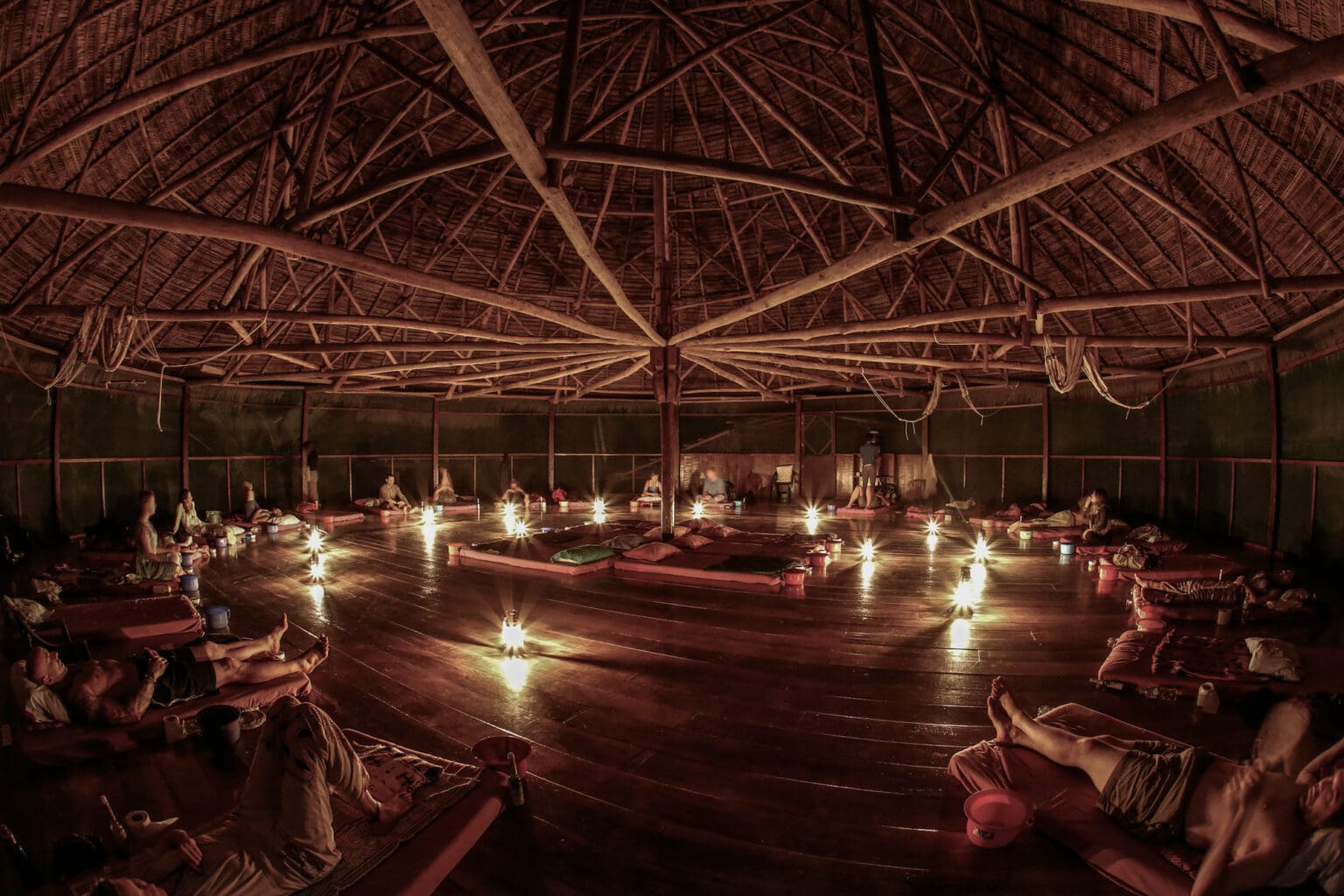
Ayahuasca is not a wellness trend. It's a psychoactive brew that Indigenous communities in the Amazon Basin have used in spiritual and healing ceremonies for centuries (possibly millennia, though the archaeological record is incomplete). In the last 15 years, it's become one of the most sought-after experiences in global wellness culture, which has created a complicated landscape: legitimate ceremonial centers operating within their cultural tradition alongside a growing number of retreat operations that range from well-intentioned to negligent.
This article covers what the ceremony involves, what the experience is like, the risks (which are real), and how to find a setting that takes the practice seriously.
What Ayahuasca Is
Ayahuasca is a brew made from 2 plants: the Banisteriopsis caapi vine and the leaves of the Psychotria viridis shrub (or similar DMT-containing plants, depending on the tradition). Neither plant produces significant psychoactive effects on its own. The vine contains MAO inhibitors that allow the DMT in the leaves to become orally active. The chemistry is specific and the combination is deliberate, which is one of the reasons researchers find the brew's origins fascinating: how did Amazonian communities identify this precise combination among the tens of thousands of plant species in the rainforest?
The brew is typically prepared by boiling the vine and leaves together for hours (sometimes days), reducing the liquid into a thick, dark tea. The taste is bitter and earthy. Most people find it deeply unpleasant.
The psychoactive effects last 4-6 hours and include visual hallucinations, emotional processing (often intense), altered perception of time and space, and physical purging (vomiting, which is considered part of the healing process, not a side effect). The experience varies enormously between individuals and between ceremonies, but certain themes recur: confrontation with personal fears, vivid imagery (geometric patterns, jungle landscapes, encounters with entities), emotional release, and a sense of expanded awareness.
The Legal Landscape
Ayahuasca's legal status is complicated and varies by country.
Peru, Colombia, Ecuador, and Brazil: legal, with established ceremonial traditions. Peru officially recognizes ayahuasca as part of its national cultural heritage.
Costa Rica: unregulated (neither legal nor explicitly illegal), and several retreat centers operate openly.
United States: DMT is a Schedule I substance, making ayahuasca illegal under federal law. Some churches (the UDV and Santo Daime) have won legal exemptions for sacramental use after Supreme Court rulings. Underground ceremonies exist in major US cities but operate without regulation.
Canada: DMT is controlled, but enforcement is inconsistent, and several retreat centers operate in legal gray areas.
Europe: varies by country. The Netherlands and Portugal have more permissive frameworks. Most other EU countries classify DMT as illegal.
If you're considering a ceremony, the legal framework of where you go matters for your safety. Legal settings have accountability. Underground settings don't.
The Ceremony Structure
A traditional ayahuasca ceremony follows a structure that's been refined over generations. The details vary by tradition (Shipibo, Quechua, Colombian, and Brazilian ceremonies all differ), but the general framework is consistent.
Before the ceremony. Most centers require a dietary preparation period (dieta) of 3-14 days before the ceremony. The standard restrictions: no alcohol, no recreational drugs, no processed food, no red meat, no pork, no spicy food, no salt or sugar in excess, no sexual activity, and no caffeine. Some centers are stricter than others. The dieta isn't arbitrary. MAO inhibitors interact dangerously with certain foods and substances (more on this below), and the preparation period also creates a psychological readiness for the experience.
The ceremony space (maloca). Ceremonies typically take place in a circular or semi-circular open-air structure called a maloca. Participants sit or lie on mattresses arranged around the perimeter. Each person has a bucket or bag nearby (for purging). The space is dark. Candles or a small fire may provide low light.
The facilitator (curandero, ayahuascero, or shaman). The ceremony is led by a trained practitioner who has undergone years (often decades) of study within their tradition. The facilitator prepares and serves the brew, sings icaros (healing songs specific to the ayahuasca tradition), monitors participants, and holds the energetic container for the ceremony. The quality of the facilitator is the single most important variable in the safety and depth of the experience.
The sequence. The facilitator serves the brew individually (typically one small cup per person). Participants drink and then wait 30-60 minutes for the effects to begin. The onset is gradual: visual distortions, a shifting sense of space, and often nausea. The facilitator sings icaros throughout, which practitioners describe as guiding the energy of the medicine. The peak effects occur 1-3 hours after ingestion. The purging (vomiting) can happen at any point and is understood as the body releasing physical and emotional toxins. The ceremony lasts 4-6 hours, typically ending between midnight and 2am.
After the ceremony. Most centers include an integration session the following morning, where participants share their experience with the group and the facilitator offers interpretation or guidance. Integration is considered essential. The ceremony opens psychological and emotional material; the integration process helps you make sense of it.
The Risks
Ayahuasca is not physically dangerous for most healthy people when taken in a controlled setting with a knowledgeable facilitator. But "most healthy people" and "controlled setting" are both doing heavy lifting in that sentence.
Drug interactions. MAO inhibitors in the brew interact dangerously with SSRIs, SNRIs, and other antidepressants, potentially causing serotonin syndrome (which can be fatal). Stimulants, MDMA, certain migraine medications, and some blood pressure medications are also contraindicated. Any legitimate center will ask about your medications during the screening process. If they don't ask, leave.
Psychiatric conditions. Ayahuasca can intensify symptoms of psychosis, schizophrenia, bipolar disorder, and severe PTSD. People with a personal or family history of psychotic episodes should not participate. Reputable centers screen for psychiatric history.
Cardiac conditions. The brew can elevate heart rate and blood pressure. People with serious heart conditions should consult a physician and disclose their condition to the center.
The facilitator risk. The most dangerous variable isn't the brew itself; it's the person leading the ceremony. Reports of sexual abuse, negligence, and untrained facilitators causing psychological harm are not isolated incidents. Due diligence on the facilitator's background, training, and reputation is essential (more on this below).
Psychological difficulty. Even in a safe setting with a skilled facilitator, ayahuasca can produce experiences that are frightening, disorienting, and emotionally overwhelming. Confronting suppressed memories, processing grief, and encountering psychological shadow material are common. This is considered part of the healing process, but it requires support during and after the ceremony. People who are in acute crisis (recent trauma, active suicidal ideation, severe depression) should seek conventional therapeutic support before considering ayahuasca.
How to Choose a Center
Screening process. A legitimate center will require a medical intake form, ask about your psychiatric history and medications, and potentially decline participants who present contraindications. If a center accepts everyone without screening, it's prioritizing revenue over safety.
Facilitator credentials. Ask about the facilitator's training. How long did they study? With whom? In what tradition? A curandero who trained for 10 years in the Shipibo tradition in the Peruvian Amazon is a different proposition from someone who attended a weekend workshop in California. Both may use the word "shaman." The depth of training is what matters.
Integration support. A center that offers pre-ceremony preparation and post-ceremony integration is taking the psychological dimension seriously. A center that serves the brew and sends you home the next morning is not.
Group size. Smaller groups (6-12 participants per facilitator) allow the facilitator to monitor each person and provide individual attention. Ceremonies with 30+ participants and a single facilitator present safety concerns.
Reputation. Ask for references. Read reviews from sources beyond the center's own website. If possible, talk to someone who's been there. The psychedelic community is active online, and forums like r/ayahuasca, Ayamundo, and Retreat Guru have user reviews and discussions that surface red flags.
Where to Go
The Peruvian Amazon is the traditional heartland of ayahuasca practice and the highest-density area for ceremonial centers. Iquitos (accessible by flight from Lima) is the gateway city. Centers like Temple of the Way of Light and Arkana Spiritual Center operate multi-day retreats with Shipibo facilitators in jungle settings. The experience in Peru includes the environment: the sounds of the jungle, the humidity, the isolation. It's immersive in a way that a ceremony in a suburban house cannot be.
Colombia has its own ayahuasca traditions (distinct from the Peruvian Shipibo tradition) and a growing number of retreat centers, particularly near Bogota and in the Amazon region around Leticia.
Costa Rica has emerged as a popular destination for Americans who want a ceremonial setting without the complexity of traveling to the deep Amazon. Centers like Soltara and Rythmia operate in legal gray areas with structured programs and medical staff on site.
After the Ceremony
The days and weeks following an ayahuasca ceremony are often described as a period of heightened sensitivity, emotional openness, and psychological processing. Many participants report shifts in perspective, changes in habits, and a sense of clarity that unfolds gradually over weeks rather than appearing immediately.
The integration period is not passive. It benefits from journaling, therapy, time in nature, clean eating, and reduced stimulation (less social media, less alcohol, fewer obligations). Some participants experience a "honeymoon phase" of euphoria and insight that fades after 2-3 weeks, followed by a quieter, more sustained integration of whatever the ceremony revealed.
Ayahuasca is a powerful experience that has helped many people and harmed some. The difference between the two outcomes is almost always the setting, the facilitator, and the preparation. Take all three seriously.